IPTV NOVA : What internet speed is required for HD/4K IPTV?

Can a single home connection really stream hundreds of Croatian channels in 4K without a hiccup?
IPTV NOVA is a big name in Croatia, offering lots of live channels and VOD titles. They claim to have 20,000–25,000+ live channels and tens of thousands of VOD titles. They support HD, Full HD (1080p), and 4K, and even 8K in some cases.
The platform boasts of top-notch infrastructure and global CDN coverage. They also have anti-buffering tech to keep streams running smoothly. They aim for uptime of 99.9% or better.
This article will tell you what internet speed you need for SD, HD, Full HD, and 4K IPTV. It also gives tips for setting up IPTV in Croatia. Some providers say you need 5–10 Mbps for HD streams, while others say 25–50 Mbps or more for 4K.
We’ll compare these numbers with what you really need for 4K IPTV. We’ll look at how device choice, household use, and network setup affect your needs.
Key Takeaways
- IPTV NOVA offers broad channel and VOD coverage with advertised HD and 4K support.
- Provider minimums vary; expect 5–10 Mbps for basic streams and 25+ Mbps for reliable 4K.
- Real-world needs rise with multiple devices, peak-hour congestion and app overhead.
- Network setup and device type often matter more than raw speed alone.
- Simple speed tests and modest headroom help avoid buffering on HD IPTV Croatia streams.
Why internet speed matters for streaming HD and 4K
Streaming high-definition or 4K video needs more than just a good app. Your internet connection must be steady to avoid poor video quality. IPTV NOVA bandwidth helps a lot, and server-side improvements are key when your connection is strong.
How bandwidth affects video quality and buffering
Higher-resolution streams need faster download speeds. If your connection is slow, you might see bad video quality or buffering. Here’s a quick guide: SD/720p works at 5–10 Mbps, Full HD at 10–25 Mbps, and 4K at 25–50+ Mbps. Sometimes, providers suggest up to 100 Mbps for 4K to ensure smooth playback.
Adaptive streaming and bitrate fluctuations
Adaptive streaming changes the stream bitrate to match your network. This keeps the video playing smoothly but might lower the quality if your connection drops. Even with this tech, sudden changes can still cause issues. Nova’s CDN and anti-freeze features help, but a steady connection is still crucial.
Impact of multiple devices and household usage on required speed
Each device streaming at the same time increases the needed bandwidth. Two 4K streams, for example, double the bandwidth needed for one. Other activities like video calls and cloud backups also use up bandwidth. Nova IPTV plans show how many devices you can stream at once. Plan your subscription by adding up the bandwidth needed for each stream and some extra for other devices and busy times.
| Stream Type | Typical Bitrate Range | Practical Speed per Stream | Notes for Shared Homes |
|---|---|---|---|
| SD / 720p | 2–6 Mbps | 5–10 Mbps | Good for single user; still add 5–10 Mbps for background tasks |
| Full HD / 1080p | 5–15 Mbps | 10–25 Mbps | Two simultaneous streams require 20–50 Mbps plus extras for other devices |
| 4K UHD | 15–50+ Mbps | 25–50+ Mbps | For households with multiple 4K viewers, plan for 50–150 Mbps depending on concurrency |
| Factors affecting real use | Jitter, packet loss, latency | Not measured in Mbps but critical | Even strong streaming bitrate Croatia numbers fail if jitter is high; test connection under load |
Recommended internet speeds for SD, HD, Full HD and 4K
This section gives you the best internet speeds for streaming in Croatia. It mixes what providers say with real-world data. This helps you pick a plan that works for your home, even when it’s busy.
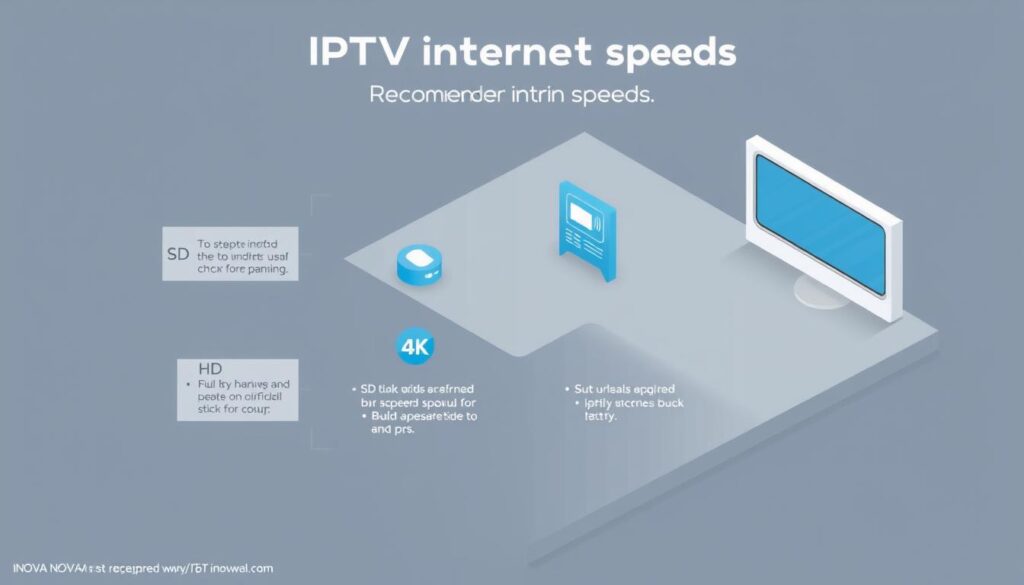
Common provider recommendations
| Resolution | Typical provider baseline | Provider suggested best | Practical minimum |
|---|---|---|---|
| SD (480p) | 5–10 Mbps | 10 Mbps | 10 Mbps |
| HD (720p) | 5–10 Mbps | 10 Mbps | 10–15 Mbps |
| Full HD (1080p) | 10–25 Mbps | 25 Mbps | 25–35 Mbps |
| 4K / Ultra HD | 25–50+ Mbps | 50 Mbps | 50–100 Mbps |
Real-world recommended speeds for reliable playback
In Croatia, internet speeds can change a lot during busy times. For one stream, go above what providers say. For SD, aim for 10–15 Mbps. For 1080p, aim for 25–35 Mbps. For 4K, choose 50–100 Mbps, depending on the channel’s quality.
For homes with many streams at once, add more speed for each stream. Two 4K streams need about 100–200 Mbps. Also, think about uplink speed if you do a lot of video calls or uploads.
Headroom and recommended buffers to avoid rebuffering
Have 20–50% extra bandwidth for sudden spikes and Wi-Fi changes. In crowded areas or during peak times, pick plans with more buffer.
For planning in Croatia, look at the iptv nova speed table and compare it to your home’s conditions. If you see drops on a 50 Mbps plan, a 100 Mbps plan might solve evening issues.
Below is a quick guide to help you choose between common plans and expected playback results.
| Plan (Mbps) | Likely single-stream quality | Multiple streams (practical) | Notes |
|---|---|---|---|
| 25 Mbps | SD to low 1080p | 1 SD + background devices | Good for light households; limited for 4K |
| 50 Mbps | Stable 1080p, entry 4K | 1–2 HD or 1 4K | Matches many recommended speeds IPTV NOVA entries |
| 100 Mbps | Reliable 4K, smooth 1080p | 2–3 HD or 1–2 4K | Preferred for multi-user homes and peak-hour headroom |
| 200+ Mbps | Multiple 4K streams | 3+ HD or 2+ 4K | Best for larger families, streaming devices, and uploads |
When picking a plan, look at both the advertised speed and your home’s test results. Use the iptv nova speed table as a starting point. Compare it with your actual speeds to find the right 4K internet speed for Croatia.
How IPTV NOVA defines its bandwidth requirements
Nova clearly states the minimum and recommended bandwidth for streaming quality. This helps customers pick the right plan and check if their devices are compatible before signing up.
Official Nova suggested minimums are SD at 5–10 Mbps, HD at 10–25 Mbps, and 4K at 25–50+ Mbps. Some pages set stricter baselines: SD 10 Mbps, HD 25 Mbps, and 4K 50 Mbps. The IPTV Nova Stream documentation suggests HD at 10 Mbps and 4K at 25+ Mbps as the minimums.
Nova uses CDNs, anti-buffering tech, and 99.9% uptime for robust delivery. These systems help improve performance on different networks. However, they can’t overcome last-mile issues or poor home Wi-Fi.
Conservative interpretations suggest higher speeds than the minimums. For example, treat a 25 Mbps 4K minimum as a starting point. For reliable 4K streaming at home, aim for 50–100 Mbps, especially with multiple devices streaming.
Device capability also plays a role. Smart TVs from Samsung, LG, and Sony, plus Fire TV, Android TV boxes, Apple TV, and common sticks can handle HD and 4K if the app and hardware are compatible. Older devices might need higher buffer and bandwidth to maintain stable playback.
Examples from plans show how pricing is tied to features and stream counts. Basic monthly plans around €9.99–€15 usually include SD and HD with one connection. Premium or yearly plans near €75–€120 unlock 4K channels and 2–5 simultaneous streams. These plans determine the combined bandwidth needs for households.
When choosing a service, match your internet package to the IPTV NOVA requirements and add some extra buffer. Consider the number of users and devices, and add extra bandwidth for peak hours to avoid rebuffering.
Device and app factors that change speed needs
Different devices and apps need different amounts of bandwidth for smooth streaming. A smart TV, a streaming stick, and a phone act differently with the same Nova IPTV channel. Make sure your device matches your internet connection for the best viewing.
Smart TV apps vary by brand and firmware. New Samsung Tizen and LG webOS models handle high-bitrate streams well. They support modern codecs like HEVC/H.265. But older TVs might struggle with 4K playback, so check if your TV is compatible with iptv nova.
Streaming boxes and sticks have different decoding power and network hardware. Amazon Fire TV and many Android TV boxes usually stream 4K reliably. But cheaper sticks or old boxes might slow down playback or limit multitasking. When buying, look for devices with modern Wi‑Fi (802.11ac/ax) or Ethernet to avoid speed issues with fire tv iptv nova setups.
Mobile devices and tablets adjust to changing bandwidth but face thermal and battery limits during long 4K sessions. Browsers on Windows and macOS use hardware acceleration and codec support. Chrome, Edge, and Safari have different HEVC support, so check before streaming. For users in Croatia, iptv nova mobile Croatia offers flexible playback, but cellular caps and carrier throttling can affect quality.
Network interfaces are as important as app design. Devices with dual‑band Wi‑Fi or wired Ethernet reach higher stable bitrates. For mixed households, choosing capable IPTV NOVA devices helps reduce buffering and delivers a smoother viewing experience across living rooms and mobile screens.
Network setup tips to achieve stable HD/4K streaming
Setting up a good home network can make your streaming smooth. Follow these tips to ensure stable Nova IPTV streaming on Smart TVs, streaming boxes, and other devices.
Wired vs. wireless: pick the right link for main players.
For main devices, use Ethernet. It offers the lowest jitter and stable throughput for 4K streaming. Compared to Wi-Fi, Ethernet is more consistent, especially during busy hours.
Optimize Wi‑Fi where wiring is impractical.
Put your router in the center and high up. Avoid thick walls and appliances that cause interference. Use the 5 GHz band for short-range 4K streams and 2.4 GHz for longer distances. Change channels to find the least crowded one and enable DFS channels if your router supports them.
Upgrade hardware to reduce contention.
Get a modern router with 802.11ac or 802.11ax support. This improves throughput and handles more streams. A dual-band model can separate 2.4 GHz and 5 GHz traffic, reducing bottlenecks.
Quality of Service and traffic priorities.
Enable QoS and prioritize your TV or streaming box’s IP or MAC address. This ensures smooth live video even when others stream or download.
Dual-band and mesh for whole-home coverage.
Use clear SSID names for each band and direct streaming devices to 5 GHz. Mesh Wi-Fi systems fix dead zones and ensure steady playback in multi-room setups. For Nova plans with multiple streams, mesh can prevent buffering.
Modem/router combos can limit control.
If your ISP’s combo lacks advanced QoS or stable Wi-Fi, use a dedicated router. This gives better control over performance tuning and ensures optimal wifi for iptv nova without ISP limits.
- Best practice: Wire the main TV or streaming box via Gigabit Ethernet.
- Wi‑Fi tuning: Use 5 GHz, choose low-interference channels, and upgrade to Wi-Fi 5/6.
- Household balance: Configure QoS and consider mesh to support several viewers at once.
How to test and verify your internet speed for IPTV NOVA
Before you start, make sure your IPTV device is set up as you normally watch Nova. Test during peak viewing hours to see how it performs in real life. Note the time and which devices are connected while testing.
Choose reliable tools for accurate results. Start with Speedtest by Ookla, then try Fast.com and Measurement Lab (M-Lab). These tools show download speed, ping/latency, and jitter. Take several readings to see consistent performance, not just a single spike.
Numbers to check
- Download throughput in Mbps — the main factor for HD and 4K.
- Jitter — keep it under 30 ms for smooth playback.
- Latency/ping — aim below ~50 ms for fast channel changes.
Match test results with your viewing needs. For 1080p, aim for 25–35 Mbps. For 4K, target 50–100 Mbps. If you have multiple viewers, increase these numbers and add 20–50% for other traffic.
High jitter or fluctuating speeds can cause issues like pixelation or rebuffering. If jitter is over 30 ms or latency is spiky, channel changes will be slow. Sustained speeds are more important than peak values.
When to contact your ISP or upgrade
- Contact your ISP if your speeds are consistently low during peak hours.
- Check if your modem or router is outdated if you have high jitter or latency.
- Upgrade your plan if you need reliable 4K for multiple users or if tests show you need more speed.
- Consider switching to fiber in Croatia for lower jitter and better speeds.
Test after any network changes, like switching to Ethernet or setting up a mesh system. If speeds improve, keep the new setup. If not, document the results and share them with your ISP for faster help. Regular speed tests ensure a smooth Nova IPTV experience.
Troubleshooting streaming issues and common fixes
If Nova IPTV shows buffering, pixelation, or sudden drops, follow a clear checklist. Start with basic network checks and move to app and provider diagnostics. These steps help find problems quickly for viewers in Croatia.
Quick network checks
- Run a wired speed test on your router to confirm baseline bandwidth.
- Reboot modem, router, and the streaming device to clear temporary faults.
- Switch to Ethernet when possible to rule out Wi‑Fi interference.
Reduce local load
- Pause large downloads, cloud backups, and other heavy traffic.
- Lower video resolution temporarily to test stream stability.
- Close background apps on Smart TVs, Android TV boxes, or phones.
App and device checks
- Update the Nova IPTV or Smart IPTV app and your device firmware.
- Clear application cache and data to remove corrupted temporary files.
- Try an alternate device to see if the issue is device-specific.
Playlist and account validation
- Confirm the M3U playlist URL is current and not expired.
- Check account activation and MAC address registration if required.
- If using third‑party playlists, verify integrity and server reachability.
When provider-side issues are likely
- If local speeds are good but streams degrade, ISP shaping or congestion may be at fault—contact your ISP for confirmation.
- Test streaming with and without a VPN to compare latency and throughput impacts.
- Check Nova IPTV status and support channels when many channels or VOD fail; CDN node problems can cause widespread issues.
Support options and response expectations
- Use live chat for fastest replies, WhatsApp for moderate speed, and email or support tickets for detailed logs.
- Keep notes of test results, timestamps, and affected channels to speed up agent troubleshooting.
If you need a targeted iptv nova buffering fix, use the steps above in order and document results. For persistent nova iptv playlist issues in Croatia, verifying playlist validity and MAC registration often solves most cases. Follow these actions and contact Nova support when provider or CDN faults are suspected.
Conclusion
For most Croatian households, the key is to match your plan to your viewing habits. For single-stream Full HD, aim for 25–35 Mbps. For steady 4K playback, plan for 50–100 Mbps, depending on peak-hour use and device overhead.
These ranges reflect real-world needs, not tight minimums. They help avoid rebuffering during busy evenings.
Homes with multiple viewers should add per-stream requirements and allow 20–50% headroom. If two to five people watch at once, choose a higher-tier Nova plan. This supports more simultaneous connections.
Use wired Ethernet for your primary 4K set-top or smart TV. Optimize Wi‑Fi with a 5 GHz band, a modern router or mesh system, and QoS for reliable performance.
When testing iptv nova Croatia, run speed tests at peak times. Compare results against Nova IPTV recommended ranges. Try Nova IPTV trial options on your devices before committing to a larger plan.
If problems persist, contact Nova IPTV support via WhatsApp, email, or live chat. Confirm MAC registration and playlist validity.
In short, the best speed for IPTV NOVA combines adequate bandwidth, the right devices, and a tuned local network. With this planning, you’ll get smooth HD and 4K streaming that fits Croatian households and family viewing patterns.